Low Back Pain
Discogenic Pain
PCP (Peripheral blood Cell Purification) offers a non-surgical, rejection-free, long-lasting regenerative option for discogenic pain caused by intervertebral disc degeneration.
What is Low Back Pain?
Low back pain is one of the most common health issues in modern society, with a lifetime prevalence of 70–85% globally, and a leading cause of disability and reduced quality of life. Most chronic low back pain originates from structural degeneration of the spine — primarily intervertebral disc degeneration and facet joint degeneration — both of which trigger inflammation and mechanical pain.
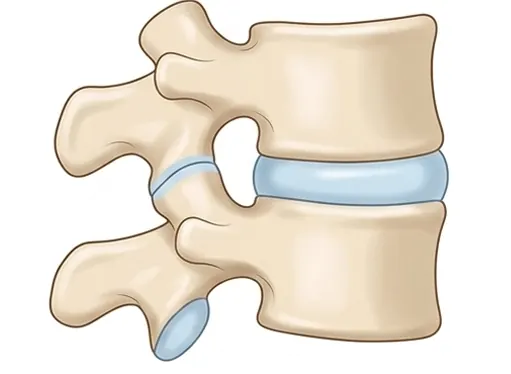
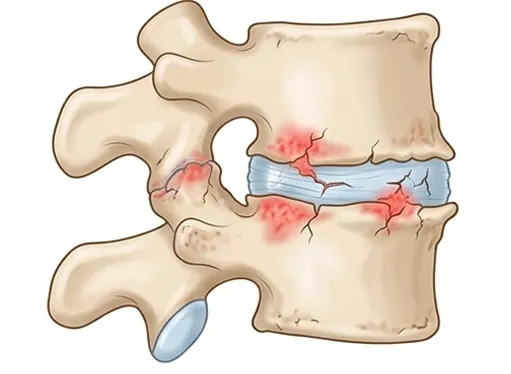
Intervertebral Disc Degeneration
Dehydration, annular tears, inflammation
With aging or repetitive load, the nucleus pulposus dehydrates and the annulus fibrosus develops tears, triggering inflammation. This presents as low back pain, stiffness, and restricted motion; severe cases can compress nerves and cause sciatic pain.
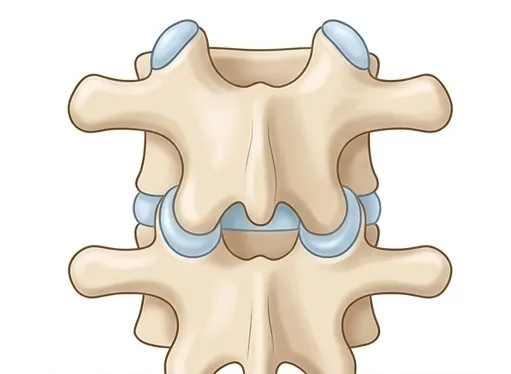
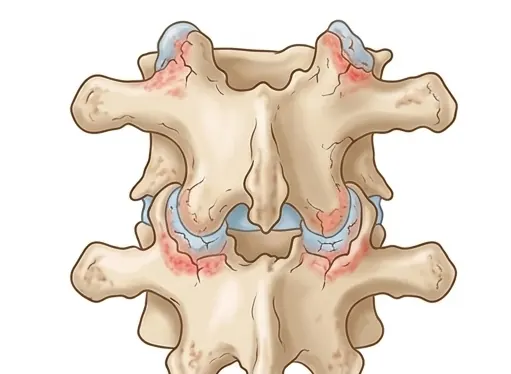
Facet Joint Osteoarthritis
Cartilage wear, osteophytes, chronic inflammation
The facet joints at the posterior spine bear long-term load and friction. Cartilage wears down, osteophytes form, and chronic inflammation develops — producing low back stiffness and localized pain that worsens with rotation or extension.
PCP Effectively Reduces Pain and Improves Disability in Disc Degeneration
Clinical follow-up shows sustained benefits beyond six months
The VAS pain score and ODI disability index are common clinical measures of back pain severity and daily function. Follow-up at three and six months shows patients receiving PCP achieved significant and sustained pain improvement.
Compared with untreated patients or PRP injections alone, the PCP group showed greater pain relief and functional recovery, with benefits sustained over longer observation.
| Metric | PCP (new) | PRP (conventional) | Key Difference |
|---|---|---|---|
Functional Improvement (Joint mobility, activity capacity) | 100% (All patients improved) | 20% (Only 1 in 5 with clear improvement) | PCP wins — 5× the functional benefit of PRP. |
Pain Relief (Pain relief & comfort) | 100% (All patients achieved pain relief) | ~70% (About 3/4 of patients improved) | PCP is more consistent — universal pain relief. |
PCP Slows Disc Degeneration and Preserves Nucleus Pulposus Integrity
MRI comparison: degeneration progressed in the PRP group, while the PCP group showed improved nucleus pulposus structure.
PRP
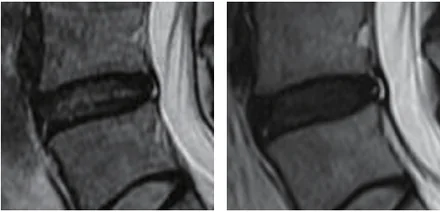
Degeneration progressed
PCP
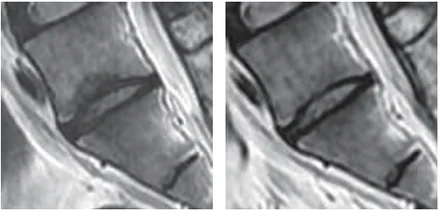
Nucleus pulposus structure improved
PCP Reduces Spinal Modic Change Bone Edema
L4/5 MRI T2 images show marked reduction in bone edema after treatment.
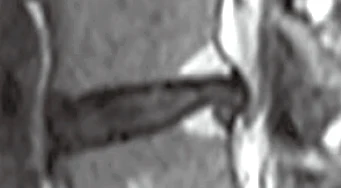
BEFORE
Pre-treatment
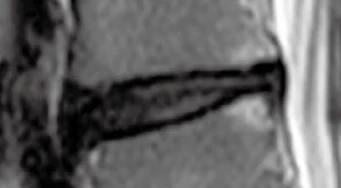
AFTER
Post-treatment
- Chung YH, Hu MH, Kao SC, Kao YH, Wang FH, Hsieh CY, Shen CI, Chuang CH, Chen DW, Kuo CC, Su HL, Lin CL. Preclinical Animal Study and Pilot Clinical Trial of Using Enriched Peripheral Blood-Derived Mononuclear Cells for Intervertebral Disc Degeneration. Cell Transplant. 2024 Jan–Dec.