Mononuclear Cell Therapy
Technology Overview
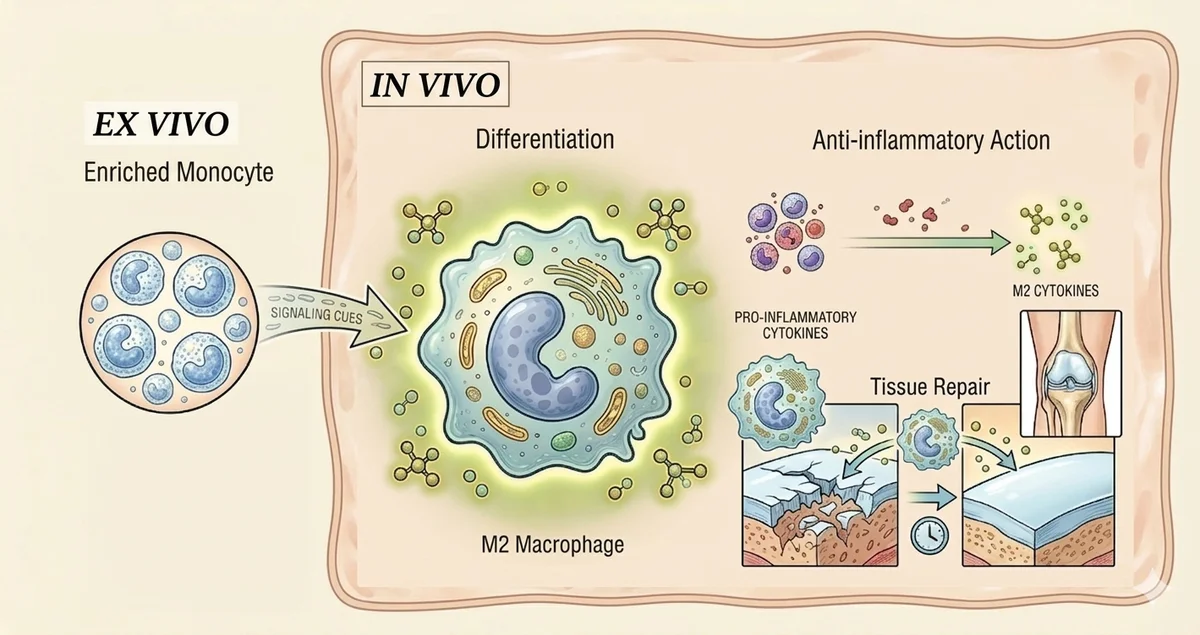
What is PCP / AI Cell Therapy?
Note: PCP stands for Peripheral blood Cell Purification; AI Cell stands for Autologous Immune Cells.
PCP is a regenerative medicine technique that precisely isolates repair-capable mononuclear cells from the patient's own blood. Doctors will inject them into the damaged tissues to achieve tissue regeneration. Unlike conventional therapies, PCP / AI Cell therapy simultaneously addresses the three core pillars of tissue engineering. We will take 100–120 cc of blood to prepare:
Growth Factors
10 fold volume PRP / growth factors
Scaffold Structure
Bio-degradable cushion / Scaffold: providing physical protection and rigid structure for hosting cell maintenance.
High-Quality Repair Cells
100 million cells for regenerative repair: the isolated peripheral blood mononuclear cells can attenuate inflammation and promote healing.
How Does PCP Differ from PRP?
| PCP | PRP | Hyaluronic Acid | |
|---|---|---|---|
| Primary Effect | Growth factors + scaffold + repair cells | Growth factor supply | Lubrication only |
| Blood Volume | Approx. 100 cc | Approx. 10 cc | None |
| Cell Purification | Pro-inflammatory cells removed; repair-type monocytes retained | Mixed cells (incl. pro-inflammatory neutrophils) | None |
| Regenerative Potential | High | Moderate | Low |
During PRP preparation, repair-capable monocytes are often co-injected with pro-inflammatory neutrophils, limiting overall efficacy. PCP therapy precisely eliminates neutrophils and further enrich the monocytes with superior repair function, resulting in significantly greater regenerative outcomes.
Conditions Treated
PCP shows superior therapeutic effects on:
- 1Low back pain caused by degenerative disc
- 2Osteoarthritis, especially for knees
- 3Avascular osteonecrosis in knee and hip
PCP also shows excellent pain control and tissue recovery on:
- 1Hip osteoarthritis
- 2Interstitial cystitis
A Safe, Proven Approach
- Uses the patient's own blood — no risk of allogeneic rejection
- Blood draw volume of 100 cc is well below standard donation thresholds (200 cc+), making it safe for most patients
- Over five years of clinical application, conducted in collaboration with physicians at multiple hospitals, without notable adverse effects