Pluto

Pluto

Chemically defined · Serum-free · Xeno-free medium for hPSC culture

Pluto
About Pluto

Pluto Chemically Defined Medium

Pluto is a chemically defined, serum-free, xeno-free medium for human pluripotent stem cells (hPSC) culture. hPSC remain their pluripotency after long-term culture using Pluto.

  • Chemically defined medium for human pluripotent stem cells (hPSC) culture
  • Serum-free & xeno-free
  • Consistent manufacture and quality control
Specifications

Specifications

Storage
−15°C or below, protect from light
Shelf Life
12 months
Notes
Avoid freeze / thaw cycles
Product NameCatalog NumberSizeGrade
Pluto ES mediumRL001500 mL / bottleResearch Use Only
Pluto ES supplementRL005S10 mL / bottleResearch Use Only
Overview

Overview

Embryonic stem cells (ESC) are the inner cell mass from blastocyst. When culturing ex-vivo, these PSC can grow, replicate and retain the ability to differentiate. These features have made PSC the focus of research. Especially after the induced pluripotent stem cell (iPSC) technique was developed by Professor Yamanaka and followed by the Nobel Prize in Physiology or Medicine in 2012, the investment in hPSC research has been even more tremendous.

hPSC culture ex-vivo is rather complicated. Traditionally, a layer of "feeder cells" must be cultured prior to hPSC, and the hPSC can then be cultured on the feeder cells. The results can easily be affected by operational variations, the sources of feeder cells and cell–cell interactions, etc.

Thanks to some of the big names in biochemical area, feeder cells are no longer required in hPSC culture. When pre-coating with certain extracellular matrix (ECM), hPSC can be cultured in vitro without feeder cells.

Pluto, a chemically defined medium, can support hPSC growth without feeder cells. The chemically defined formulation reduces variations and makes hPSC culture easier than it used to be.

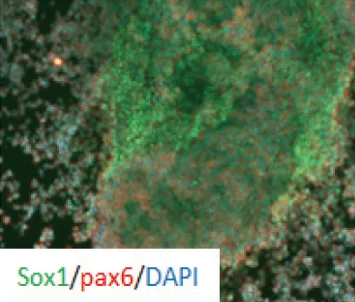
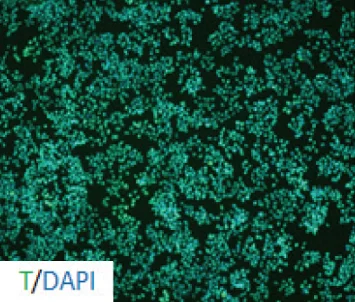
hPSC remain undifferentiated and retain their pluripotency after long-term culture using Pluto. With specific stimulations, these hPSCs can differentiate into three germ layer cells.

Pluto is manufactured under GMP and ISO 13485 certified facility, with culture performance tested batch-to-batch.

Data

Data

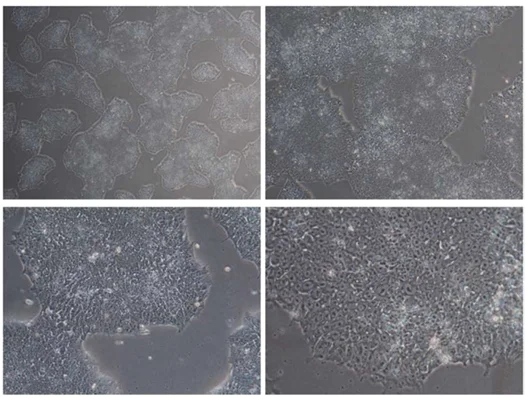
Cell morphology of hESC cultured using Pluto

hESC Morphology

H9 (hESC) cultured in Pluto human iPS/ES cell culture medium on Geltrex-coated plates display a colony morphology typical of normal feeder-free iPS/ES cell cultures, including high nucleus-to-cytoplasm ratio, prominent nucleoli, and distinct colony edges.

Compare Pluto to commercial hPSC medium

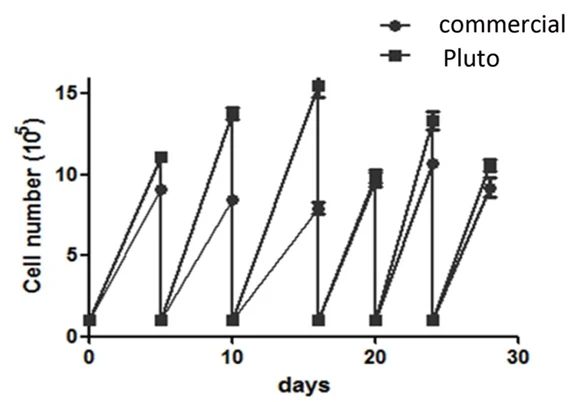
The equivalent study demonstrates Pluto human iPS/ES cell culture medium has the same proliferation performance as commercial products.

Proliferation Comparison

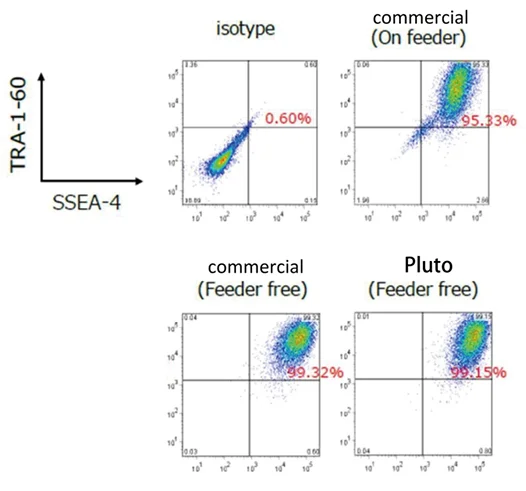
hPSC cultured using Pluto are pluripotency markers positive

Pluripotency Flow Cytometry

Flow cytometry results show that the pluripotency maintenance is similar in Pluto human iPS/ES cell culture medium and commercial media products in feeder and feeder-free culture systems.

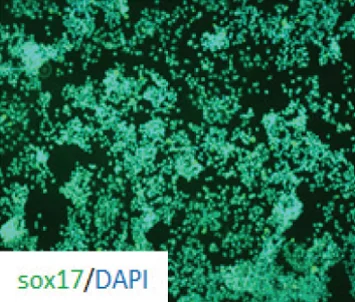
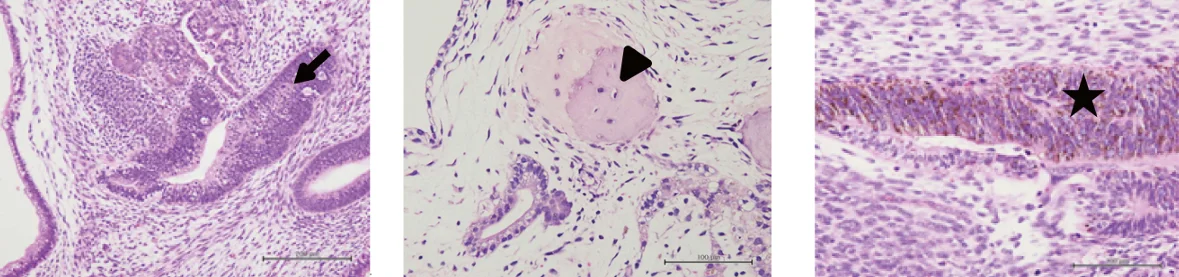
The differentiation potential remains after hESC cultured using Pluto

(A) Three germ layers
Ectoderm

Ectoderm

Mesoderm

Mesoderm

Endoderm

Endoderm

(B) Teratomas
Teratoma

H9 cultured using Pluto can be induced and differentiate into: (A) Three germ layers; (B) Teratomas. Arrow: Gland; Arrow head: Bone; Star: Melanocyte.

Custom Services

CMO / CDMO Custom Manufacturing Services

All culture media products are available for CMO (Contract Manufacturing) and CDMO (Contract Development and Manufacturing) services, including formula customisation, specification tailoring, regulatory documentation, and full-scale support from small batches to mass production.

Documents

User manual and more information are available upon request.